
Md. Eftekharul Alam Emon
Environmental pollution remains greatest challenge facing the world today. Gradually increasing, it poses a significant threat to various living organisms, including humans. Human activities, such as urbanization, industrialization, mining, and exploration, play a crucial role in exacerbating global environmental pollution. These issues burden both developed and developing countries. Environmental pollution occurs when harmful substances or energy are introduced into the environment, resulting in its degradation.
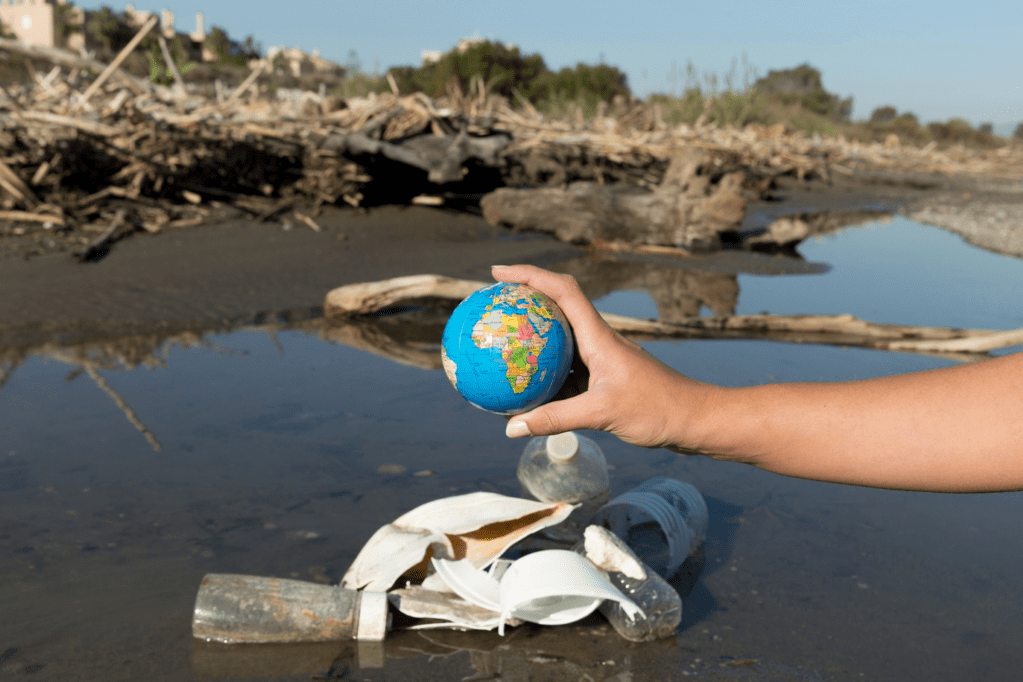
According to the Bangladesh Country Environmental Analysis (CEA), each year about 272,000 premature deaths and 5.2 billion days of disease are attributed to air pollution, contaminated water, inadequate sanitation and hygiene, and lead exposure. In 2019, these environmental problems cost Bangladesh’s GDP 17.6% of what it was. The most harmful air pollution to health comes from homes and outdoor spaces; it causes about half of all premature deaths, which in 2019 alone accounted for 8.32% of GDP.
The Major Environmental Issues in Bangladesh
Air Pollution: Bangladesh suffers from severe air pollution caused by the burning of biomass, rapid industrialization, and vehicle emissions. The capital city, Dhaka, is frequently ranked among the world’s most polluted cities. High concentrations of particulate matter, sulfur dioxide, and nitrogen dioxide in the air pose serious health risks, exacerbating respiratory conditions and other illnesses. Additionally, poor air quality negatively impacts agriculture and ecosystems.
Noise Pollution: Noise pollution is one of the most dangerous health hazards in Bangladesh. According to WHO 60 decibel (DB) sound could make a man deaf temporarily and 100 DB sound could cause complete deafness. According to the Department of Environment (DOE), the perfect sound condition for Bangladesh is 50 DB at day time and 40 DB at night in residential areas. The main sources of noise pollution are industries, motorized vehicles, construction works and indiscriminate use of loudspeakers. In Dhaka city it is 60 DB to 100 DB. Experts view that if this continues half the population of Dhaka city will lose 30per cent of their hearing power.

Water Problems: Water contamination is another significant environmental challenge faced by Bangladesh. The extensive network of rivers, including the Ganges and Brahmaputra, serves as a vital resource for transportation, irrigation, and livelihoods for millions. Unfortunately, runoff from agrochemicals, untreated sewage, and industrial waste has polluted these waterways. The presence of toxins and heavy metals not only harms aquatic life but also endangers the health of those reliant on these water sources for daily activities and drinking. For example, every day around 700 tanneries of Dhaka city discharge approximately 16000 cubic meters of toxic wastes in rivers. The Buriganga and Turag rivers full of contaminated water destroying fish resources. The water of these rivers is not even usable for human being.
Soil Contamination: Agriculture plays a pivotal role in Bangladesh’s economy, providing sustenance for a significant portion of the population. However, soil contamination caused by the excessive use of chemical pesticides and fertilizers poses risks to crop productivity and public health. Toxic substances accumulated in the soil have a detrimental impact on the quality of food production and may jeopardize consumer health. To ensure long-term food security, implementing sustainable agricultural practices and effective waste management is imperative.
Solid and Hazardous Wastes: Bangladesh faces considerable challenges in managing solid and hazardous wastes. The rapid urbanization, industrialization, and population growth have led to substantial volumes of waste generation. The accumulation of municipal solid waste in cities and towns can release greenhouse gases, contaminate water sources, and serve as breeding grounds for disease vectors. Furthermore, the production of electronic waste (e-waste) has become a significant concern due to the rising use of electronic devices. Improper disposal of e-waste leads to the environmental contamination of hazardous substances such as lead, mercury, and cadmium. Unofficial recycling operations without proper safety precautions contribute to the release of toxic compounds. Approximately 4000 tons of solid wastes are generated daily and only half of the generated wastes are disposed of in low lying areas or into rivers.
Impact of Pollution on Human Health
In Bangladesh, extreme environmental pollution is endangering not just people’s health but also the country’s ability to thrive economically. Urban dwellers are mostly impacted by air pollution. Inhaling smoke can immediately result in headache, dizziness, burning eyes, sneezing, nausea, fatigue, coughing, and other symptoms. In the long run, it may result in bronchitis and asthma. Lead damages the kidneys, liver, reproductive system, and circulatory nerves. It occasionally results in cirrhosis and malignancy. Development and growth are hampered by carbon monoxide exposure. Pneumonia is caused by nitrogen oxides. Numerous waterborne illnesses are caused by industrial pollutants. Lung, kidney, and skin cancers are slowly brought on by arsenic exposure. Deafness and heart attacks are caused by noise and sound pollution. Moreover, it raises blood pressure. Pollution caused over 2.15 lakh premature deaths in Bangladesh in 2019.
According to a study published in the medical journal The Lancet, occupational risks, lead and water pollution, and poor air quality were the other reasons of these deaths. The leading cause of these deaths was poor air quality. According to a report titled Pollution and Health: A Progress Update, over 30,000 deaths were caused by water pollution, but about 1.75 lakh deaths were caused by air pollution alone. Heart disease, cancer, respiratory disorders, and other diseases are all closely associated with pollution. According to the report, occupational risks and pollution of the air, water, and lead caused at least 215,824 deaths in 2019. Bangladesh was in sixth place on the list of nations where pollution causes early mortality, with 2,357,267 deaths. India was first on the list.
Economic Impact of Environmental Pollution
Over the past few decades, Bangladesh has witnessed severe environmental degradation and a loss of natural capital, affecting industrial productivity, environmental services, human health, agriculture, forests, and fisheries. An estimated 19 million people in Bangladesh depend on forests for their livelihoods. Rapid changes in land use jeopardize the country’s remaining woodlands, which serve as a safety net for the impoverished and as a buffer against climate change-induced rising coastal soil salinity. The economic losses resulting from environmental degradation are estimated to be $6.5 billion annually, accounting for 3.4 percent of Bangladesh’s GDP. In Bangladesh, approximately 28% of deaths are attributed to air and water pollution. The Environmental Performance Index (EPI) ranks Bangladesh 162nd out of 180 countries in terms of pollution severity.
Air pollution poses a significant environmental problem, impacting the population of major cities in Bangladesh. Due to air pollution, Bangladesh incurs an economic loss of $14 billion annually. Global air pollution costs approximately $2.9 trillion, equivalent to 3.3 percent of the world’s gross domestic product (GDP), predominantly caused by the combustion of fossil fuels. However, for Bangladesh, this expense represents more than five percent of its GDP. Although Bangladesh ranks seventh among the nation’s most vulnerable to climate-related disasters, its contribution to global emissions that contribute to climate change is merely 0.56%.
Water pollution poses serious health hazards in Bangladesh. Each day, approximately 16,000 cubic meters of toxic waste are discharged into rivers by 700 tanneries in Dhaka. The careless dumping of solid waste, including household and hospital garbage, is a major cause of water pollution in Bangladesh. Less than half of the daily production of 4,000 tons of solid waste is properly disposed of, often without any form of treatment. Hospitals and clinics in Dhaka city produce and discharge harmful pollutants that are poisonous and dangerous without proper treatment.
Bangladesh’s experience serves as a lesson for other rapidly developing countries, highlighting the importance of preserving environmental well-being alongside economic progress. The choices we make today will determine whether Bangladesh succumbs to the consequences of its growth or becomes a model of sustainable development, demonstrating that a thriving economy and a clean, healthy environment can coexist. This is not solely Bangladesh’s battle; it is a global challenge. We all have a role to play in supporting and learning from Bangladesh’s efforts to ensure a cleaner and healthier future for all.
Author is a Student,
Dept. of Environmental Science and Engineering
Jatiya Kabi Kazi Nazrul Islam University
Email: eftekharul.alam98@gmail.com
 envreview.com