
Oishi Paul

Blue economy refers to the use of ocean and marine resources for sustainable development. Blue Economy was first proposed by Professor Gunter Pauli in 1994. The ocean is one of our most important natural resources. The modern world is currently dependent on the sea; the world’s economy depends on it. The blue economy mainly refers to shipping, tourism industry, fishing industry, trade, energy extraction, etc. The Blue Economy founded in line with the concept and principles of, and mutually supportive of the Green Economy, is a tool that offers specific mechanisms for Small Island Developing States (SIDS) and coastal countries to address their sustainable development challenges.
Bangladesh is a small country with a vast population. It is possible to turn the population into a public resource by using it properly. A blue economy can create a huge field of employment for populous people. Bangladesh is a delta, i.e. the Bay of Bengal; the sediments from the rivers and canals are deposited in this country.
In 2012 and 2014, the maritime boundary dispute between Myanmar and India was settled by the International Court of Justice and the absolute authority, rights, and sovereignty of Bangladesh in the territorial sea area of 118 thousand 813 square kilometers were established, thus the potential of the blue economy has increased.
According to World Bank estimates, marine resources currently contribute only 9.6 billion US dollars or 6 percent to the economy of Bangladesh. But there are huge amounts of resources under the sea that are capable of the economic development of our country.
There are 2 types of resources in the sea – 1. Living resources 2. Non-living resources. Living things include various species of fish, insects, spiders, marine animals, various trees, shrubs, octopuses, shrimps, squids, lobsters, jellyfish, crabs, sharks, whales, snails, etc. On the other hand, non-living things include various mineral resources such as oil, coal, gas, and limestone. Fisheries are one of the major living resources. The continental
shelf of BD extends over an area of about 66,400 km2 of which about 37,000 km2 is within the 50m depth zone and has good fisheries resources. It contributes 3.69% to the GDP of the country and 22.60% to the agriculture GDP (FRSS, 2016). Carbon sequestration is a process of uptaking CO2 over a long time into the coastal habitats having mangrove forests, intertidal saltmarshes, and seagrass beds, and such stored carbon is often referred to as blue carbon.
These habitats have been found to fix carbon at a much higher rate per unit area than land-based systems and be more effective at the long-term sequestration of carbon than terrestrial forest ecosystems. Coastal ecosystems can store carbon at rates estimated to be up to four times higher than mature tropical forests. Bangladesh is blessed with diverse coastal habitats, such as mangrove forests, salt marshes, and seagrass beds, and the exact amount of carbon stored by these ecosystems is still an active area of research. In non-living resources, gas, fuel, and oil play an important role. There are 26 Tcf (trillion cubic feet) gas reserves that have so far been discovered in Bangladesh. Important minerals like Titanium, Limonite, Zircon, Rutile, Magnetite, Leucoxene, kanite, etc. are found in the beach sand of vast areas of Cox’s Bazar district. Shipbuilding and shipbreaking industries are other important non-living resources of the blue economy. Bangladesh has more than 100 shipbuilding yards, most serving the domestic market. Nearly 100 to 130 ships are being scrapped in Bangladesh every year. Though it is risky work, which is one of the major causes of marine pollution, the shipbreaking industries contribute to our nation’s economy.
It contributes more than $500m annually. There are 3 seaports in Bangladesh which is also a major non-living resource of the blue economy. Chittagong seaport is the largest seaport in Bangladesh. The Pyra seaport in Patuakhali, government plans to gradually turn into a deep-sea port.

Common salt, i.e. Sodium chloride (NaCl) production through evaporating marine waters is a traditional ancient practice all over the world. In Bangladesh, marine salt production has been traditionally produced mostly in Cox’s Bazar coastal areas. Marine tourism is one of the most gainful sectors in Bangladesh. We have an incredible chance to become a tourist-based country.
We can make it by using our seaside. The economic potential of Bangladesh can be fostered by attracting more tourists, and this will not only help achieve the goals outlined in the Sustainable Development Goals (SDG) but also contribute to GDP growth.
In Bangladesh, a country with a long coastline along the Bay of Bengal, there are several constraints like environmental degradation, climate change, lack of technology advancements, maritime security, etc. The role of marine resources in poverty alleviation, acquiring autarky in food production, protecting environmental balance, facing adverse impacts of climate change, and other economic possibilities are unlimited.
But with the potentialities and possibilities the challenges also accompany. The challenges are lack of data and information, weak institution and governance, weak management, lack of investments, lack of awareness, etc.
A successful blue economy is the collaborative efforts of oceanographers, engineers, navigators, merchant mariners, fisheries technologists, biologists, biotechnologists, etc. A comprehensive blue economy framework is proposed for Bangladesh’s sustainable extraction of blue resources. The Blue Economy initiative specifically aims to increase job opportunities in the short, medium, and long-term time frames. Some recommendations are needed for successful blue economy execution.
Bangladesh should increase its marine educational institutions. Expert needed in the fields of oceanography, marine dynamics, marine engineering, biotechnology, marine fisheries, marine trade, offshore engineering, naval architectural engineering, marine geological aspect, marine environment, ecosystem science, etc. Then pure marine research-based organizations must be established with up-to-date modern technologies (e.g., Deep-sea research vessels, underwater cameras, etc.). After this strong ocean governance that promotes the blue economy.
They were followed by the public-private partnership that plays a key role in the sustainable blue economy as a way to enhance capacity building. Then the priority sectors must be recognized based on domestic and global needs and research work must be carried out on the identified sectors.
International collaboration is needed for technical assistance, technology transfer, and capacity building. Ocean resource management and exploration are highly dependent on such kind of collaboration. Maritime security is essential to protect EEZ and high seas areas from international smugglers, trafficking of drugs, humans, etc. Followed by marine resources exploration and exploitation should be executed in an environmentally ecofriendly way.
Marine ecological balance must be ensured. This committee will report the progress and failure from time to time to the concerned authorities. Finally, the Bangladesh government adopted some legislation and regulatory framework for maritime and ocean governance.
These are the Territorial Water and Maritime Zones Act, Coastal Zone Policy-2005, Coastal Development Strategy-2006, Port Act 2006, Wild Conservation Act-2002, Provision of Ecologically Critical Area (ECA) Regulation 1995, the Bangladesh Petroleum Act-1974, National Energy Policy-2004, Bangladesh Water Policy-1999, Bangladesh Water Act-2013, etc. Most of the legislation and regulations were enacted a long time ago.
It should be updated from time to time based on changing social, economic, cultural, and environmental circumstances.
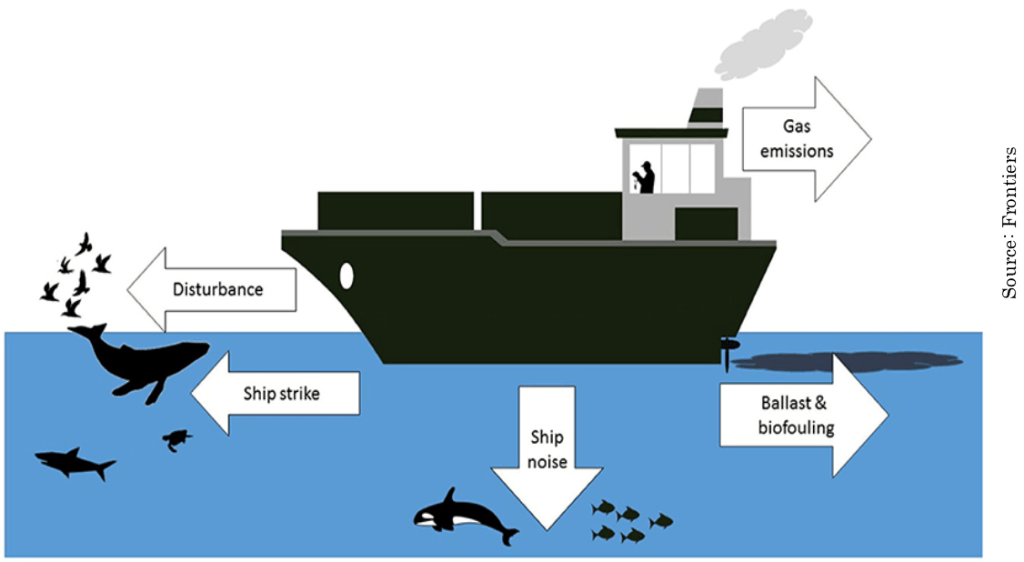
The current government has looked into the scope and potential of the Blue Economy. Bangladesh Delta Plan-2100 or Delta Plan-2100 has already been adopted. The maritime economy has been given priority in this master plan. Recently the government has established the Bangladesh Oceanographic Research Institute and a Maritime University for marine research and human resource development. I
n addition to this, the present government is working on the construction of deep-sea ports, production of thermal power plants in coastal areas, extraction of other valuable resources including gas, extraction of fish resources, etc. With the proper use of marine resources, the marine economy can become the main driving force of the country’s economy.
The Blue Economy in Bangladesh presents opportunities for economic diversification, job creation, poverty reduction, and sustainable development. The use of skilled manpower, budget allocation, international cooperation, use of technology, various projects, sustainable practices, and sea bed exploration can open a new door for the development of Bangladesh.
Author is a student at the Department of Environmental Science and Engineering, Jatiya Kabi Kazi Nazrul Islam University, Trishal, Mymensingh—2224, Bangladesh
Email: oishipaul12@gmail.com
 envreview.com