
Md. Ziaul Islam

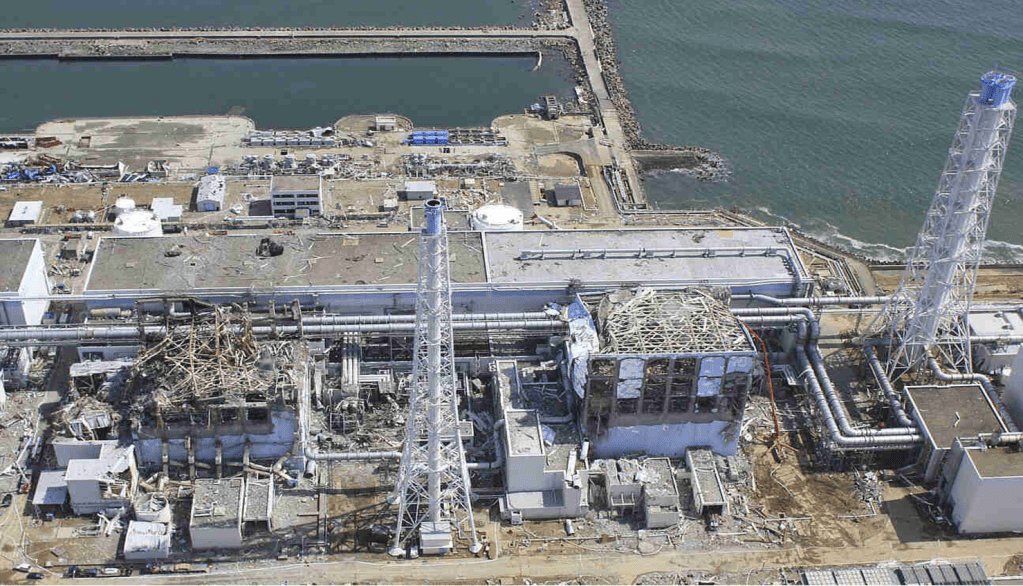
After getting a green signal from the UN’s nuclear watchdog, the International Atomic Energy Agency (IAEA), Japan started proportionally releasing treated radioactive wastewater into the Pacific Ocean from its Fukushima power plant on 24 August 2023. The remaining wastewater water will be released in the next 30-40 years through the underwater tunnel to the Pacific Ocean. Japan carried out this wastewater release with the collaboration of the Japan Nuclear Regulation Authority and Tokyo Electric Power Company (TEPCO), which has been operating the destroyed Fukushima Daiichi Nuclear Power Station.
In the aftermath of the accident, an astounding amount of nuclear wastewater, totaling more than 1.3 million tons – sufficient to occupy approximately 500 Olympic-sized swimming pools – has been diligently accumulated, treated, and confined within a designated tank farm at the Fukushima power plant. However, distressingly, the Japanese government has now conveyed that this storage facility is rapidly approaching its maximum capacity, leaving them with no alternative but to initiate the discharge of this wastewater into the ocean.
After discharging the diluted wastewater, the reaction has already come out across the globe. Neighboring countries and regions, including China, South Korea, and the Philippines have expressed deep concerns that the wastewater released by Japan may not remain confined to Japan alone. The inter-governmental group of Pacific islands, including Australia and New Zealand also expressed grave concerns.
Amid anger among neighbors and environmentalists worldwide, the IAEA, which stands by Japan, believes it “will have negligible radiological impact on people and the environment.” Moreover, the leaders of Japan claim this radioactive wastewater is safe enough to drink, while the IAEA Director General Rafael Mariano Grossi states this discharging is “both technically feasible and in line with international practice.”
Despite the assurance of the IAEA and the Japanese government, scientists worldwide still see clues to the detrimental consequences of this wastewater release. According to Robert Richmond, Director of the Kewalo Marine Laboratory at the University of Hawaii, “We are unanimous in our view that this has not been proven to be safe.” He mentioned that “pollutants like tritium can pass through various levels of the food chain–including plants, animals, and bacteria–and be bioaccumulated.”
He remarked that the Japanese government’s radioactive water discharging plan is “ill-advised” and precipitous since “Anything released into the ocean off of Fukushima is not going to stay in one place.” He says that numerous scientific studies have provided evidence indicating that radioactive substances and waste materials discharged from the initial Fukushima catastrophe were rapidly identified at approximately 8,851 kilometers off the Californian coastline.
Scientists warned that radionuclides can be transported via ocean currents, consequently leading to their dispersion among marine creatures that are capable of traversing vast distances. The wastewater that contains radioactive tritium, a hydrogen isotope, consuming large quantities of it may potentially elevate the risk of cancer. The US Nuclear Regulatory Commission has recognized that “any exposure to radiation could pose some health risk.”
Last year, the United States-based National Association of Marine Laboratories opposed Japan’s plan to discharge wastewater and cited “a lack of adequate and accurate scientific data supporting Japan’s assertion of safety.”
Many see Japan’s behavior as a threat to the marine ecological environment. Nations of several Pacific Islands have also expressed their strong concerns, mentioning the potential harm of this radioactive water release to the livelihoods of their people and economy. The leader of the Pacific Islands Forum referred to it as an enigmatic Pandor’s box, alluding to the unpredictable and potentially disastrous consequences it could entail. It is predicted that the radioactive wastewater release will severely impact the people of the Pacific Islands and South China Sea regions.
Scientists in certain nations bordering the Pacific Ocean express concern regarding the possible ramifications of this phenomenon on the intricate web of food chains and delicate ecosystems within the region. People are seen storing seafood and sea salt as a fear of price hikes and shortages. Meanwhile, many countries and regions, including mainland China, Hong Kong and Macao have already banned exporting seafood from the Japanese regions of Tokyo, Fukushima, Chiba, Tochigi, Ibaraki, Gunma, Miyagi, Niigata, Nagano and Saitama. Authorities in mainland China are investigating food originating from Japan.
The spokesperson for the Ministry of Commerce in China, Shu Jueting, strongly criticized Japan’s proposed action of releasing wastewater, deeming it highly irresponsible. Shu Jueting further expressed concerns about the potential consequences, asserting that such a move could inflict severe damage and harm upon the delicate global marine ecosystem, with unpredictable ramifications.
The Foreign Ministry of the Democratic People’s Republic of Korea (DPRK) strongly condemned the release of wastewater, describing it as a “crime against humanity.” South Korean opposition party leader mocked Japanese Deputy Prime Minister Taro Aso’s statement on the safety of the water and said, “If it is safe enough to drink, they should use it as drinking water.”
South Korean opposition leaders alleged that the ruling government compromised on public health issues by supporting Japan’s immature wastewater release plan. Though the discharge has raised concerns for Taiwan’s Atomic Energy Council, Taiwan remains silent on this issue due to political gains.
In a statement, the Department of Foreign Affairs of the Philippines said, “As a coastal and archipelagic state, the Philippines attaches utmost priority to the protection and preservation of the marine environment.”
Fishing communities in China, South Korea and the Philippines have voiced their strong opposition to the discharge of treated wastewater from nuclear power plant, expressing deep concerns about the potential negative impacts on the economic sustainability of coastal communities.
However, Japan also encountered intense opposition from local fishing groups, such as the National Federation of Fisheries Cooperatives, who expressed concerns about the potential negative impact on their fishing yields over the extended period that the wastewater will be discharged. These organizations fear that their catches will be disregarded or rejected due to the release of the wastewater.
Many international environmental organizations like Greenpeace were outraged by Japan’s decision. According to Shaun Burnie, a senior nuclear specialist at Greenpeace East Asia, “This is an outrage that violates the human rights of the people and communities of Fukushima, and other neighboring prefectures and the wider Asia-Pacific region.”
Author is a Researcher at the Institute of Environmental Law (RIEL), School of Law, Wuhan University, Wuhan 430072, P.R. China
 envreview.com