
Probal Talukdar
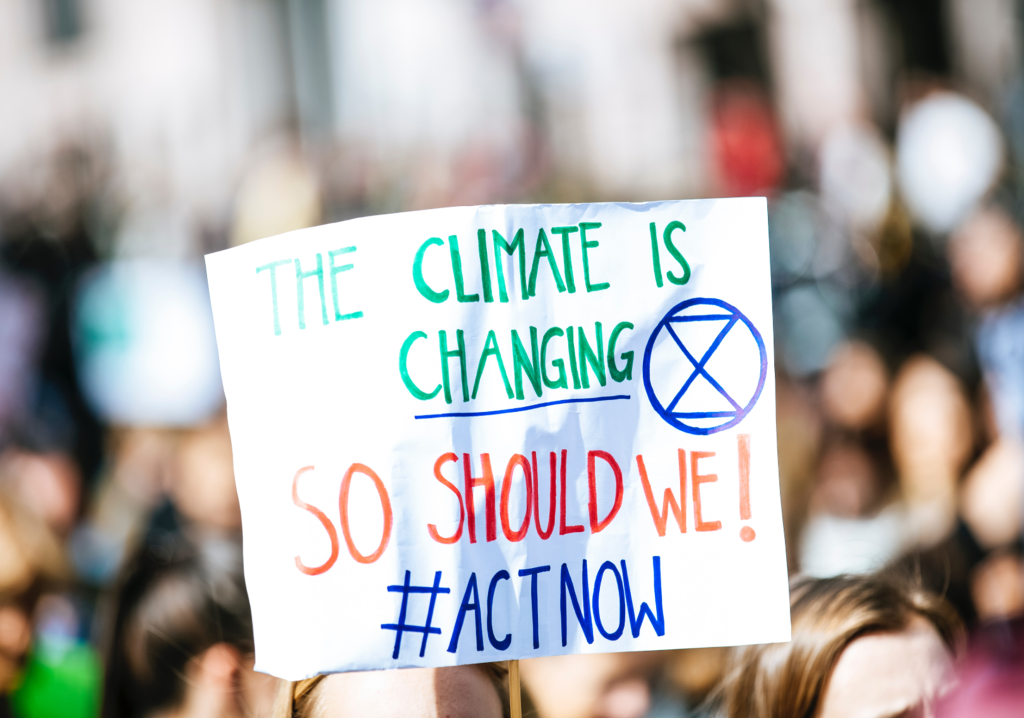
Barack Obama said, “We are the first generation to feel the impact of climate change and the last generation that can do something about it”. When you are considering your environment as your subsidiary element for existence you have to be attentive to the elements of the environment such as living organisms as well as temperature, pressure, humidity, and many more to conduct your life more fluently. These elements are classified into two categories and they are biotic and abiotic. Temperature, pressure, humidity, and many more are part of abiotic factors. These factors are relatable to the meteorological process. The meteorological process induces the climate change mechanism which means the dramatic alteration of average weather conditions over several decades or longer, such as growing warmer, wetter, or drier. The difference between climate change and natural weather variability is in the longer-term tendency. A long-term change in temperature and climatic pattern.
Different factors have an impact on climate change and these factors have two types one is human-induced and the other one is natural. Global warming is a major phenomenon that acts as an activator of climate change.
There is also a significantly larger chance of severe and potentially catastrophic changes in the global environment. Because of this, the world community has acknowledged the necessity of limiting global warming to 1.5°C and keeping it far below 2°C. Greenhouse gases are contributing to global warming. The quantities of carbon dioxide, methane, and nitrous oxide in the earth’s atmosphere are higher currently than they have ever been in the previous 800,000 years. Currently, about 30 billion tons of carbon dioxide are released annually into the atmosphere as a result of human activity.6 Since the beginning of the industrial era, the amount of carbon dioxide in the atmosphere has grown by more than 40%, from around 280 parts per million (ppm) in the 18th century to 414 ppm in 2020. From around 722 parts per billion (ppb) in the 18th century to 1,867 ppb in 2019, human activity elevated methane concentrations to more than 2.5 times the pre-industrial level over most of the 20th century. Since the beginning of the Industrial Revolution, nitrous oxide concentrations have increased by around 20%, with very significant growth at the end of the 20th century. In 2019, nitrous oxide concentrations were 332 ppb, up from a pre-industrial level of 270 ppb. Natural processes are also exploiting this phenomenon. Changes in the earth’s orbit and rotation, variations in solar activity, changes in earth reflectivity, volcanic activity, and change in carbon-di-oxide concentration are the parameters to determine this change. It was around 11°F cooler on average throughout the world then than it is now. But the average global temperature was only marginally 2°F higher during the height of the previous interglacial period. Deforestation, energy production, transportation, etc. are also contributing in this regard. An estimated 12 million hectares of forest are burned annually. Destruction of trees reduces nature’s capacity to keep emissions out of the atmosphere because they absorb carbon dioxide. A percent of the world’s greenhouse gas emissions are caused by deforestation, along with agriculture and other changes in land use.

Global climate change has a great deleterious impression on the global environment and biodiversity. According to NOAA From 1901 to 2020, the world’s temperatures increased by around 1.8°F (1°C). Since 1993, the pace of sea level rise has increased from 1.7 mm/year, which it was for most of the twentieth century. The average thickness of 30 well-studied glaciers has declined by more than 60 feet since 1980, indicating that glaciers are thinning. Since 1979, there has been a 40% decrease in the amount of sea ice that covers the Arctic at the end of the summer. During 1958, there has been a 25% increase in atmospheric carbon dioxide levels, and there has been a 40% increase during the Industrial Revolution. When compared to long-term trends, snow is melting earlier. Humans’ continued exploitation of land, particularly for food production, is the primary cause of biodiversity loss. Over 70% of all ice-free land has already changed as a result of human activities. Some animal and plant species may lose their habitat and go extinct when land is used for agriculture. But the loss of biodiversity is mostly attributed to climate change. 4% of mammals are losing their habitat to the temperature of 1.5 degrees Celsius. For 2 degrees it will be 8%. Following the trend, it will jump to 41% for 3 degrees of rise. Every fraction of the degree matters for the survival of coral reefs. An increase from 1.5 degrees can engulf about 70-90% of coral reefs. If it increases over 2 degrees can destroy 99% of the reefs. At 2C of global warming, the maximum allowed by the Paris Agreement, one in ten species is expected to be in extremely high danger of going extinct. At 3C, 13% at 4C, and 15% at 5C, this increases to 12%. According to the Intergovernmental Panel on Climate Change (IPCC), the world’s leading authority on climate change, average global temperatures have increased by 1.2C since the beginning of the industrial era and atmospheric CO2 is at its highest level in at least two million years. According to a different UNCCD analysis published this year, up to 40% of the Earth’s land area has already been degraded by human activity, which has already affected 70% of the planet’s land surface. 87% of the ocean has also been affected by humans. According to the research, four of the nine “planetary boundaries” — bounds on how humans may sustainably use Earth’s resources — have already been reached. The research also stated that between 1970 and 2016, the populations of fish, amphibians, birds, amphibians, and mammals worldwide declined by an average of 68%. Animal populations decreased by 94% in tropical Central America and South America. Human livelihood directly or indirectly relies on the biodiversity mechanism. If the biodiversity is destroyed the survival of humans will be in danger.

Climate change has a devastating effect on human health. respiratory and heart conditions, pest-borne illnesses like Lyme disease and West Nile Virus, illnesses connected to water and food, injuries, and fatalities are just a few of the health implications of climate change. A decline in general mental health and an increase in violent crime have both been related to climate change. A person’s vulnerability mostly depends on three key factors which are exposure, sensitivity, and adaptive capacity. According to the World Health Organization (WHO), climate change causes at least 150,000 fatalities annually, a number that is projected to more than quadruple by 2030. Climate change is predicted to result in an extra 250 000 fatalities per year between 2030 and 2050, mostly from starvation, malaria, diarrhea, and heat stress. Between USD 2-4 billion/year in direct health damage expenses are projected by 2030. Around 12% of the world’s population, or more than 930 million individuals, spend at least 10% of their family income on health care. Around 100 million people are presently pushed into poverty each year due to health shocks and pressures, with the effects of climate change making this trend worse because the poorest people are mainly uninsured. According to The Daily Star, climate change has cost Bangladesh $3.72 billion in economic losses over the previous 20 years. 9 crore people, or around 56% of the country’s population, reside in “high climate exposure areas,” with 5.3 crore of them experiencing “very high” exposure. The glacier of the Himalayans are disappearing 65% faster from 2011 to 2020 due to climate change as a result many infectious microorganisms are released into the environment and they are detrimental to human health. An epidemic of legionnaires’ disease, a bacterial lung illness linked to global warming, wracked the United Kingdom in 2006. Tens of thousands of employees worldwide have perished in recent decades from chronic kidney disease and other ailments connected to excessive heat, according to a global conference held in Qatar as spring temperatures soared to 40 degrees Celsius (104 degrees Fahrenheit). The conference was informed that the frontline includes around one billion farm laborers as well as tens of millions employed in construction and other outdoor sectors. However, there are heat-related risks for gardeners, mail delivery employees, and pool lifeguards. Throughout 30 to 40 years, construction workers may be exposed to enough UV radiation to more than quadruple their chance of developing non-melanoma skin cancer.
Analyzing the mentioned information, it is crystal clear climate change has devastating effects on both environment and human health. So, it is more important to optimglobal climate change as well as the monitoring of global climate patterns for a better world. Many initiatives have been introduced in this regard. United Nations Framework Convention on Climate Change (UNFCCC) was established in 1992 to stabilize greenhouse gas in the atmosphere. The UNFCCC’s Kyoto Protocol, which was adopted in 1997, was a global accord. It introduced systems including carbon trading and the Clean Development Mechanism (CDM) and set legally enforceable emissions reduction objectives for industrialized nations (often referred to as Annex I countries). A significant global accord to tackle climate change is Paris. Accord, which was approved in 2015. It pursues attempts to keep the temperature increase to 1.5 degrees Celsius while limiting global warming to far below 2 degrees Celsius over pre-industrial levels. The pact fosters international collaboration on adaptation, financing, and technology transfer while emphasizing nationally determined contributions (NDCs). The UNFCCC’s top decision-making body is the COP. Each year, it brings together delegates from almost 200 nations to discuss climate change adaptation and mitigation, evaluate progress, and negotiate agreements. The 2018 Global Climate Action Summit offered a stage for non-state players, such as corporations, cities, regions, and civil society, to highlight their climate pledges and initiatives. In addition to national government initiatives, it is intended to boost global climate action. Many nations and regions have put in place carbon pricing mechanisms including carbon taxes and emissions trading schemes. To motivate firms to cut their emissions and invest in cleaner technology, these methods place a price on carbon emissions. Moreover, the government and skilled hybridizers at the local level have to come forward in this regard. Consciousness at the mass level is also required to mitigate and fight against this phenomenon. Concededly “Those who have the privilege to know have the duty to act.”— Albert Einstein.
Author, Student Department of Environmental Science and Engineering Jatiya Kabi Kazi Nazrul Islam University.
Email: talukderprobal27@gmail.com
 envreview.com