
Shafiul Kayes and Md. Akik Tanjil Jihan
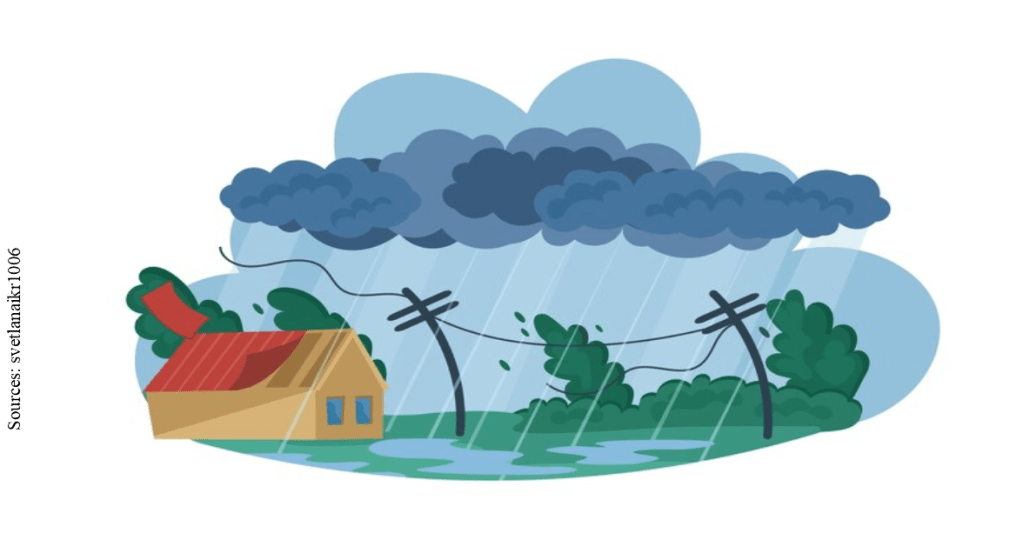
The year 2023 has seen several significant natural disasters around the world, including floods in Libya and North China an earthquake in Morocco, Turkey, and Syria, and wildfires in North America. These events have caused widespread damage and displacement, highlighting the increasing vulnerability of communities to the impacts of climate change.
The geographic distribution of these disasters has been broad, with events occurring in all regions of the world. However, some regions, such as South Asia and North America, have been particularly hard hit. The impact of these disasters on people and property has been devastating. Millions of people have been affected, with many losing their homes and livelihoods. The economic damage caused by these disasters is also significant. Many factors have contributed to the occurrence of these disasters, including climate change. Climate change is leading to more extreme weather events, such as heavier rainfall, more intense storms, and longer droughts. This is making communities more vulnerable to natural disasters.
1 Libyan floods
On September 10, Storm Daniel caused significant flooding in the northeast of Libya, killing people and destroying infrastructure in a number of coastal cities and along rivers, including Derna, Benghazi, Al-Jabal Al-Akhder, Al-Marj, Batah, Bayada, Albayda, Shahat, and Sousse. Due to two dams that burst upstream and spilled over 30 million cubic meters of water onto the city of Derna, it seems to be particularly heavily damaged.
“In Derna and other afflicted districts, early estimates point to thousands of casualties, while more than 10,000 people have been reported missing. When the floods in eastern Libya first began, the Libyan Red Crescent stated that 11,300 people had passed away.”
The United Nations initially used that number, but on 17 September it decided to use the World Health Organization’s estimate of 3,958 deaths.
2 Morocco earthquake
On September 8, Morocco was shaken by a powerful earthquake with a magnitude of 6.8 on the Richter scale. The earthquake struck just after 11 p.m. local time, causing widespread concern and triggering emergency response efforts. The earthquake’s depth was 11.5 miles and the epicenter was in the High Atlas Mountains, in the Al Haouz region, 44 miles southwest of Marrakesh, close to the town of Adassil. Other Moroccan towns including Casablanca, Agadir, Essaouira, and Rabat all felt a shaking sensation. Portugal and Algeria both reported feeling it. 380,000 persons at the very least were afflicted.
According to official statistics, more than 5,600 people have been injured, and there have been nearly 3,000 fatalities.
3 Turkey-Syria earthquake
On February 6, a significant earthquake struck the border region between Turkey and Syria, shaking communities on both sides of the border. The earthquake had a magnitude of 7.8, and its impact was felt across a wide area. This was followed almost nine hours later by a magnitude 7.5 earthquake positioned approximately 59 miles (95 kilometers) to the southwest. The total number of confirmed deaths was 59,259: 50,783 in Turkey and 8,476 in Syria. It is the worst natural catastrophe in modern Turkey since the 526 Antioch earthquake and the deadliest earthquake in the country’s history. This seismic event resulted in considerable damage to buildings, infrastructure, and homes, posing serious risks to the safety of residents. Local authorities in both Turkey and Syria, along with international relief organizations, quickly responded to provide assistance and assess the extent of the damage.
4 Cyclone Mocha
Extremely Severe Cyclonic Storm Mocha was a catastrophic tropical storm that devastated Myanmar and portions of Bangladesh in May this year. The cyclone hit the coast at 12:30 pm Bangladesh time on 14th May. About 34 thousand people were directly affected by the impact of Cyclone Mocha in Bangladesh. There was no loss of life. 1200 houses were destroyed on Bangladesh’s St. Martin Island. The entire island was destroyed by the uprooting of trees. 10,500 houses were damaged in Cox’s Bazar district. Hundreds of houses in the Rohingya camp were destroyed by the storm. Another, many areas of Myanmar’s Rakhine State were cut off. The telephone system in Sittwe town collapsed. Cyclone Mocha caused a lot of damage. According to various organizations, at least 463 people have died due to Mocha in Myanmar’s Rakhine.

5 North American wildfires
A series of wildfires have started in the forests of the North American state of Canada, and they intensified in June. Although Canada has a limited number of wildfires each year, this year’s wildfire season was the worst wildfire season on record for Canada and even the entire North American continent. Earlier in 2020, the wildfires in California were the worst wildfire scenario. On June 25, the Canadian Interagency Fire Center announced that this year’s wildfire season was the worst in recorded Canadian history, surpassing the 1989, 1995, and 2014 wildfire seasons. As of July 19, 2023, 4,285 separate wildfires occurred in Canada during the season, burning 1,09,71,638 hectares of forest land.
6 North China floods
The death toll from recent floods in and around China’s capital Beijing has increased to 33, including five rescuers, with 18 people missing, as much of the country’s north remains threatened by heavy rain. On Sep. 13, a flash flood and landslide killed 24 people and left three persons missing at Weiziping village in Xi’an City. At least 900 families were impacted, but just two homes were damaged. Recently, China’s capital has seen record rainfall, causing infrastructure damage and flooding in swaths of the city’s suburbs and neighboring territories. Days of severe rain wreaked havoc on Beijing’s hilly western suburbs, destroying 59,000 houses, damaging almost 150,000 more, and drowning more than 15,000 hectares (37,000 acres) of agricultural production. Many roads were also damaged, along with more than 100 bridges. On Sep.2, over 880,000 people had to be evacuated as Typhoon Saola slammed southern China.
The global and national frameworks for disaster management are designed to reduce the risk and impact of natural disasters. These frameworks involve a range of stakeholders, including governments, international organizations, and non-governmental organizations. The different phases of disaster management include prevention, preparedness, response, and recovery.

However, there are a number of challenges and opportunities for improving disaster management in the future. One challenge is to better integrate disaster management into development planning. Another challenge is to ensure that disaster management is inclusive and equitable and that it addresses the needs of all vulnerable groups. An opportunity is to use new technologies, such as big data and artificial intelligence, to improve disaster risk assessment and early warning systems.
Authors are student at the Department of Environmental Science and Disaster Management of Bangabandhu Sheikh Mujibur Rahman Science and Technology University, Gopalganj
Email: shafiulkayes@gmail.com
 envreview.com